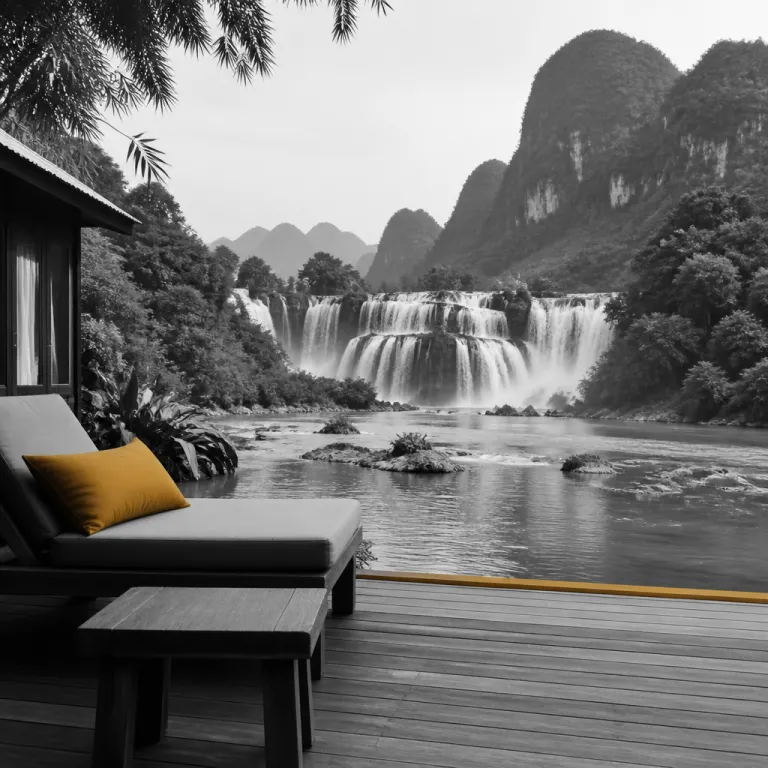
Section 1 – Why Ban Gioc Waterfall belongs on a luxury Vietnam itinerary
Ban Gioc Waterfall in Cao Bằng Province is one of the most dramatic scenic spots in northern Vietnam. This multi-tiered cascade stretches roughly 300 meters across the Quây Sơn River, creating powerful falls that form a natural border between Việt Nam and China. For travelers who value privacy, space, and tailored service, this relatively hidden gem offers a calmer alternative to more crowded Vietnamese destinations.
The surrounding landscape near Ban Gioc is a tapestry of limestone peaks, rice terraces, and pretty river bends that feel far removed from busy Hà Nội or Hồ Chí Minh City. Because the waterfall marks the Việt Nam–China frontier, you see bamboo rafts drifting below the cascades on both sides, while mist rises from the falls and softens the karst skyline. Local guides sometimes describe the scene at dawn as “mây ôm núi” (clouds embracing the mountains), a poetic phrase that captures the way low fog wraps around the cliffs and rice paddies.
Ban Gioc Waterfall is officially located in Đàm Thủy Commune, Trùng Khánh District, about 90 kilometers from Cao Bằng City by road. The site is recognized as one of the most impressive natural landmarks in the country, and it is often compared with the nearby Detian Falls on the Chinese side of the river. According to Lonely Planet’s Vietnam guide (latest edition), Ban Gioc ranks among the widest waterfalls in Southeast Asia, and improved infrastructure over the last decade has made it easier to reach while still preserving its amazing rural character.
Section 2 – Planning your route from Hà Nội and Cao Bằng in comfort
Most luxury travelers reach Ban Gioc Waterfall after first flying or driving to Hà Nội, then continuing north toward Cao Bằng. From Hà Nội, you can arrange a private car and driver for the full route, or combine a premium coach with a curated transfer arranged through a high-end hotel or specialist travel agency in Việt Nam. Some guests prefer to break the journey with a refined overnight in the capital before taking an early bus toward the mountains.
From Hà Nội to Cao Bằng City, the drive along the main highway corridor takes around six to eight hours depending on traffic and road conditions. While there is a public bus from Hà Nội to Cao Bằng, discerning travelers often choose a chauffeured SUV or limousine-style van instead of a standard coach service, because the extra legroom and quieter cabin make the long day more pleasant. Once you reach Cao Bằng, the onward route to Ban Gioc Waterfall usually takes another two to three hours by private vehicle, passing through pretty valleys and small Vietnamese villages.
For those planning a wider northern Vietnam itinerary, it is possible to combine Ban Gioc with other scenic icons such as refined Hạ Long Bay cruises, using carefully sequenced transfers. Many travelers book a luxury Hạ Long Bay experience through a specialist platform that also handles their Ban Gioc arrangements, allowing a seamless shift from seascapes to waterfalls. You can read a detailed guide to Hạ Long Bay tours for refined travelers to understand how to balance coast and mountains in one elegant journey.
Section 3 – Choosing where to stay: luxury hotels, premium lodges, and elevated homestays
The immediate area around Ban Gioc Waterfall remains pleasantly undeveloped, so you will not find large international chains right beside the falls. Instead, travelers choose between upscale lodges near the waterfall, premium guesthouses in Cao Bằng City, and carefully selected homestay options that offer comfort with authentic Vietnamese hospitality. A good luxury-focused booking service will pre-screen each stay in Cao Bằng to ensure consistent standards for bedding, cleanliness, and service.
Many guests opt to base themselves in Cao Bằng for two or three nights, then arrange a private day trip to Ban Gioc Waterfall and nearby caves. Staying in the city gives you a wider choice of restaurants, better spa options, and more reliable Wi-Fi, while still allowing easy access to the falls by private car or high-quality transfers. For travelers who want to wake up closer to the waterfall, a premium homestay near the river can provide an amazing sunrise view over the karst peaks and the gentle sound of distant waterfalls.
Some travelers combine a northern Vietnam circuit with a coastal retreat or a luxury rail journey further south, using a single booking platform to coordinate hotels, transfers, and curated experiences. For example, after exploring Ban Gioc and the surrounding region, you might fly south and enjoy a refined rail experience on Vietnam’s most elegant train from Đà Nẵng to Quy Nhơn. This kind of multi-region itinerary works best when your hotel reservations, private drivers, and local guides are all synchronized through one trusted luxury specialist rather than scattered affiliate links.
Section 4 – When to go, how long to stay, and what it really costs
Ban Gioc Waterfall can be visited year-round, but the character of the falls changes with the seasons. During the rainy period from roughly May to September, the cascades are at their fullest, with powerful torrents that make the waterfall feel truly amazing. In the drier months from October to April, the water volume drops, yet the visibility improves and the surrounding rice fields often glow a pretty shade of gold.
For most travelers, one full day at Ban Gioc Waterfall is enough to see the main viewpoints, enjoy a bamboo raft ride, and visit nearby caves. However, if you appreciate slow travel and want to photograph the falls at different times of day, consider a two-night stay in Cao Bằng or a one-night stay near the waterfall itself. This extra time allows you to enjoy quieter early morning and late afternoon light, when the bus tours have gone and the border landscape feels more serene.
The cost in Vietnamese đồng for a refined trip varies widely depending on your hotel category, private transport, and guiding. As a broad reference, entrance tickets to the Ban Gioc Waterfall area and nearby caves are modest in VND terms (often in the range of 50,000–100,000 VND per site), while private SUVs, English-speaking guides, and premium meals in Cao Bằng account for most of the budget. A luxury booking website in Việt Nam can provide transparent VND estimates for each component, helping you compare options without being overwhelmed by scattered affiliate links or inconsistent local quotes.
Section 5 – Experiences around Ban Gioc Waterfall: caves, viewpoints, and local food
Beyond the main Ban Gioc Waterfall viewpoint, the surrounding area offers several worthwhile excursions that elevate your stay. Nguom Ngao Cave, located a short drive from the falls, is a spectacular limestone cavern with dramatic stalactites and stalagmites that pair beautifully with a waterfall-focused itinerary. Many private tours combine Ban Gioc, Nguom Ngao, and a scenic lunch stop in one seamless day trip from Cao Bằng.
Some travelers also explore the so-called Tiger Cave area and other karst formations, which provide quieter trails and alternative angles on the waterfall landscape. Because this region sits along the Việt Nam–China border, you will notice subtle differences in architecture, markets, and even farming techniques on the Vietnamese side of the river. Local guides from Cao Bằng can explain how communities on both sides of the border have long shared customs, while still maintaining distinct identities within northern Việt Nam.
Food is a highlight of any stay in Cao Bằng, with simple yet flavorful Vietnamese dishes that reflect the cool mountain climate. Expect grilled river fish, sticky rice, and seasonal vegetables, often served in family-run restaurants or at your homestay near the falls. A good hotel booking website in Việt Nam will flag properties known for great food, so you can plan a stay that includes both refined comfort and memorable local cuisine rather than relying on chance.
Section 6 – Practical tips for a seamless luxury visit to Ban Gioc Waterfall
When planning your visit, start by checking the latest information on border permits, as the waterfall lies directly on the frontier between Việt Nam and China. According to guidance from the Cao Bằng provincial tourism authorities, foreign visitors may enter the Ban Gioc scenic area with a valid passport and Vietnamese visa, and a separate border permit is not usually required for standard sightseeing within the designated tourist zone. However, regulations can change, so luxury-focused agencies and premium hotel concierges in Cao Bằng or Hà Nội should confirm current rules and handle any necessary paperwork on your behalf, ensuring that your day at the falls is smooth and stress-free.
Use Google Maps to review the route from Cao Bằng City to Ban Gioc Waterfall, but rely on your driver’s local knowledge for the final approach and timing. Road conditions, weather, and occasional bus traffic can affect travel time, so a flexible schedule is essential for a great experience. Many travelers choose to stay in Cao Bằng the night before their visit, then depart early to reach the waterfall before the main bus tours arrive from the city and other hubs.
For those who want to extend their journey, consider pairing northern mountains with a refined beach or spa retreat elsewhere in Việt Nam. After exploring the Ban Gioc region and enjoying a peaceful homestay or premium lodge, you might fly south and unwind at a serene beachfront escape such as a coastal resort near Hồ Chí Minh City. Coordinating these contrasting stays through one trusted booking platform helps you manage cost expectations in VND, align transfers, and avoid the confusion that can arise from multiple unconnected affiliate links.
Key figures about Ban Gioc Waterfall and Cao Bằng
- The main cascade of Ban Gioc Waterfall is approximately 300 meters wide, making it one of the largest waterfalls in Việt Nam by width according to Lonely Planet, and this scale is immediately apparent when you arrive at the viewing platforms.
- The waterfall drops around 30 meters from top to pool, a height that creates impressive spray without making the bamboo raft rides feel unsafe for cautious travelers, based on data referenced by Lonely Planet.
- The distance from Cao Bằng City to Ban Gioc Waterfall is roughly 90 kilometers by road, which typically translates into a two to three hour drive depending on traffic and weather, so most visitors plan at least a full day trip for the excursion.
- The rainy season from about May to September usually brings the highest water volume, while the drier months from October to April offer clearer skies and easier photography, so your preferred style of travel should guide the timing of your stay.
FAQ about Ban Gioc Waterfall for luxury and premium travelers
What is the best time to visit Ban Gioc Waterfall for a luxury trip ?
The rainy months from roughly May to September offer the most powerful waterfalls and dramatic photographs. However, travelers who prioritize comfort and clear views often prefer the drier period from October to April, when humidity is lower and the roads from Cao Bằng are usually easier. A luxury-focused booking website in Việt Nam can help you choose dates that balance water levels, crowd patterns, and your wider itinerary.
How do I travel from Hà Nội to Ban Gioc Waterfall in comfort ?
The most comfortable option is to arrange a private car and driver from Hà Nội to Cao Bằng, then continue by private vehicle to Ban Gioc Waterfall the following day. Some travelers use a high-quality bus service for the Hà Nội to Cao Bằng leg, then switch to a chauffeured SUV for the final stretch to the falls. In both cases, pre-booking through a trusted platform ensures reliable vehicles, vetted drivers, and realistic travel time estimates.
Should I stay in Cao Bằng City or near the waterfall ?
Staying in Cao Bằng City gives you a wider choice of premium hotels, better restaurant options, and easier access to services such as ATMs and pharmacies. Staying near Ban Gioc Waterfall, often in an elevated homestay or lodge, offers quieter surroundings and the chance to see the falls at sunrise or sunset. Many travelers choose a combination, spending one night in the city and one night closer to the waterfalls for a balanced experience.
Do I need a visa or special permit to visit Ban Gioc Waterfall ?
Most international visitors already hold a valid Vietnamese visa or visa exemption for their wider trip. For Ban Gioc specifically, current guidance from local tourism authorities indicates that no additional visa is required and that a separate border permit is generally not needed for visits confined to the official tourist area. Your hotel in Cao Bằng or your tour operator can confirm the latest regulations and arrange any formalities in advance so that your day trip proceeds smoothly.
Is Ban Gioc Waterfall suitable for families and older travelers ?
Yes, Ban Gioc Waterfall is generally suitable for families and older travelers, provided that mobility levels are considered when planning. The main viewpoints are accessible via relatively gentle paths, and bamboo raft rides can be enjoyed at a relaxed pace when water levels are moderate. A tailored itinerary with private transport, flexible timing, and carefully chosen accommodation in Cao Bằng or near the falls will make the experience comfortable for all ages.