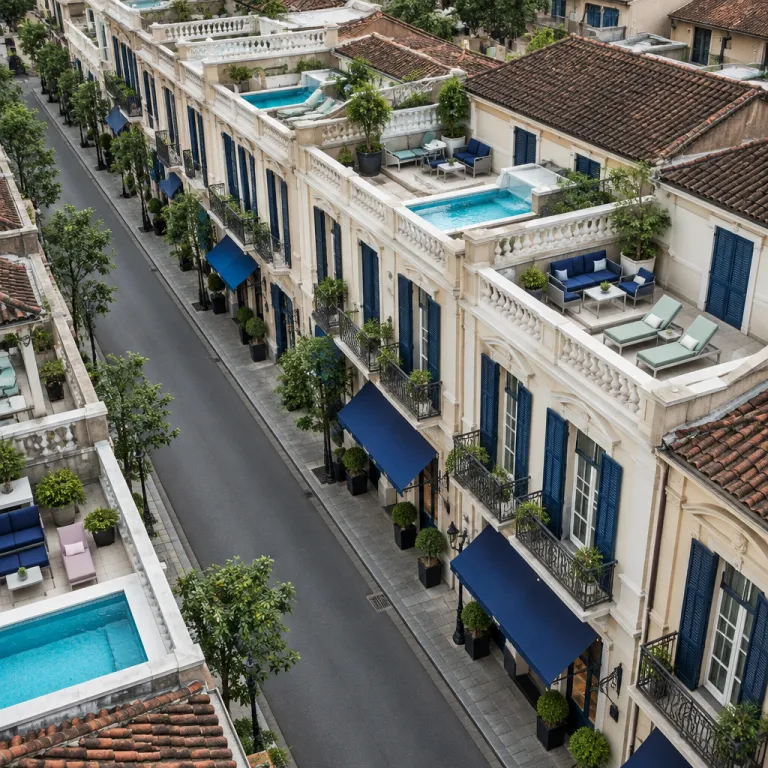
Hanoi French Quarter luxury hotel: where heritage frames your stay
Hanoi’s French quarter feels different the moment you cross from Hoàn Kiếm’s tight alleys into its tree lined avenues. The façades shift from shophouse grit to french colonial arches, and every hanoi hotel here trades on that contrast between history and polished service. For a solo traveler choosing a hanoi french quarter luxury hotel, the question is not only which property looks the best, but which one turns this layered quarter into a meaningful stay.
The district’s grand dame is Sofitel Legend Metropole Hanoi, often shortened to Metropole Hanoi by regulars who treat it almost as a private club. This hotel hanoi icon wraps its colonial wing and newer opera wing around a courtyard pool, with rooms that range from compact classics to high ceiling suites that still whisper french colonial stories. Step outside and you are within a 10 minute walk of the opera house, Hoàn Kiếm lake and the cafés that make quarter Hanoi such an easy base for a first or repeat stay.
Newer arrivals push the definition of a central hotel in the french quarter, especially as the district stretches toward Hanoi Westlake and the embassy area. Fairmont Hanoi, a 241 room property near Hoàn Kiếm lake, brings a large scale hotel spa, a vast wellness center and the largest pillarless ballroom in the Old Quarter, which changes the skyline and the conversation about what luxury hotels Hanoi can support. For solo guests, that means more choice in hotel bars, more varied spa Hanoi menus and a wider spread of prices across the top tier hotels.
Not every hanoi french quarter luxury hotel is a star hotel in the conventional sense, and that is part of the appeal for independent travelers. Smaller addresses lean into the idea of a luxury boutique experience, with fewer rooms, lower price points and a stronger connection to local cafés and late night phở counters. When you compare hotels Hanoi in this area, think less about a rigid five star label and more about how each property’s scale, history and location will shape your stay Hanoi from morning coffee to the last drink at the bar.
Walking the line between french colonial history and modern comfort
Every serious hanoi french quarter luxury hotel faces the same tension ; how far can you renovate before you erase the very history guests came for. In practice, that means architects negotiating with preservation authorities over façades, balconies and even the color of shutters on century old french colonial buildings. Inside, designers quietly add soundproofing, better air conditioning and more generous bathrooms, so that the rooms feel current without turning the hotel into a generic glass tower.
At Metropole Hanoi, the heritage wing preserves original staircases, tiled corridors and a wartime bunker tour that anchors the hotel’s narrative in Vietnam’s turbulent past. Cross to the newer wing and you find a different expression of luxury boutique style, with brighter rooms, more contemporary furniture and a hotel spa that feels international rather than nostalgic. This duality lets guests choose whether their stay leans toward history or toward the comfort of a modern central hotel, while still keeping one foot in the same quarter Hanoi streetscape.
Fairmont Hanoi, by contrast, was purpose built rather than carved from an older colonial shell, yet it still borrows cues from french architecture in its arches and proportions. The property’s 38,000 square foot wellness center and expansive hotel spa facilities show how far expectations have shifted for a hanoi hotel that wants to compete at the top end. When you compare prices between these hotels Hanoi, remember that newer builds often deliver larger rooms and more extensive spa Hanoi amenities, while heritage properties trade on atmosphere and proximity to the most storied corners of the french quarter.
For solo travelers planning a longer stay Hanoi, this heritage versus renovation debate has practical implications. Older buildings can mean more character but also slightly higher noise levels at night, especially if your room faces a busy bar street or a late opening café. Before booking, study floor plans, ask for courtyard facing rooms where possible, and use planning resources such as this guide to planning a luxury stay in Vietnam to align your expectations with the reality of staying in a living, evolving historic quarter.
From hotel lobby to Hanoi’s cultural landmarks in fifteen minutes
One reason solo travelers gravitate to a hanoi french quarter luxury hotel is simple ; you can walk almost everywhere that matters. From most central hotel addresses near Hoàn Kiếm lake, the opera house sits less than 10 minutes away on foot, its yellow façade anchoring the district’s french colonial identity. Turn another corner and you reach the Hoa Lo Prison site, while a slightly longer stroll takes you toward St. Joseph’s Cathedral, often called Joseph Cathedral by locals and drivers.
This compact geography means your stay Hanoi can unfold in layers rather than in long taxi rides. Start the morning with coffee near Hoàn Kiếm, loop past the opera house, then cut through quieter streets toward the cathedral, watching how the quarter Hanoi shifts from embassies and galleries to family run noodle shops. By night, the same walk feels different again, with hotel bars glowing behind shutters, street vendors setting up near the lake and the sound of live music drifting from small venues that rarely make international guides.
Not every landmark sits within the french quarter grid, but the area connects easily to other parts of Hanoi. A short ride brings you to Hanoi Westlake, where lakeside hotels Hanoi offer a different rhythm, with larger grounds and more resort style hotel spa complexes. If your trip spans multiple regions of Vietnam, consider pairing a few nights in a hanoi french quarter luxury hotel with time in rural retreats ; resources such as this guide to hotels and experiences that shine after the crowds leave can help you balance city intensity with quieter landscapes.
Back in the quarter itself, the walkability also shapes how you use your hotel as a base. You might check prices for a late checkout, leave your bags with the concierge, then spend your final hours circling the lake or revisiting a favorite café near Joseph Cathedral. That ease of movement, combined with the density of museums, galleries and historic sites, is what turns a simple hotel booking into a richer stay that keeps many travelers returning to this part of Hanoi rather than shifting to newer districts.
Hotel rooms, prices and the solo traveler’s value equation
For a solo explorer, the question is rarely which hanoi french quarter luxury hotel is objectively the best, but which one delivers the right mix of space, service and price. Entry level rooms in heritage properties can run smaller, yet they often compensate with high ceilings, wooden shutters and a sense of history that no new build can replicate. Newer hotels Hanoi in the area tend to offer larger rooms with more storage, bigger desks and bathrooms that feel closer to international norms.
When comparing prices, look beyond the headline rate and consider what is included in your stay Hanoi. Some properties fold breakfast, spa Hanoi access and late checkout into their packages, which can make a higher nightly price more reasonable once you factor in the cost of eating and relaxing elsewhere. Others keep the base price lower but charge more for extras such as hotel spa treatments, airport transfers or even premium coffee at the bar, which matters if you plan to work from the lobby between museum visits.
Solo travelers often find strong value in smaller luxury boutique properties that sit just off the main french quarter arteries. These hotels may not have the same name recognition as Metropole Hanoi or Fairmont Hanoi, but they can offer quieter rooms, more flexible booking policies and staff who have time to share local tips about where to eat near Hoàn Kiếm lake at night. If your itinerary includes other regions of Vietnam, pairing these stays with countryside properties featured in guides such as where terraced rice paddies meet luxury stays in Vietnam can stretch your budget without sacrificing comfort.
Pay attention to how each hotel hanoi describes its room categories, especially in older french colonial buildings where layouts can vary widely. A “city view” might mean a charming glimpse of the opera house, or it might translate into more street noise at night if a nearby bar runs late. When in doubt, email the property directly, ask for specific room numbers or floors, and use your booking as a chance to secure the kind of quiet or buzz that matches your personal rhythm in Hanoi.
Eating, drinking and unwinding: when the street outshines the lobby
Hanoi’s french quarter has never been a place where hotel restaurants automatically win the night. Step outside almost any hanoi french quarter luxury hotel and you are within minutes of independent spots on Tràng Tiền or Nhà Thờ streets that locals actually choose for dinner. This creates a healthy tension ; hotels must elevate their own dining, bar programs and hotel spa snacks if they want guests to stay in rather than wander out.
For solo travelers, this competition works in your favor, because you can treat your stay Hanoi as a rolling tasting menu. One night you might try a refined Vietnamese set menu inside a grand hotel hanoi dining room, the next you could be perched on a low stool near Joseph Cathedral with a bowl of bún chả that costs a fraction of the hotel price. The key is to use the concierge or front desk as a filter, asking which local places staff actually visit after their shifts rather than relying only on glossy recommendations.
Wellness follows a similar pattern, with hotel spa facilities coexisting alongside independent massage studios and yoga spaces scattered through quarter Hanoi. A large hanoi hotel such as Fairmont Hanoi or Metropole Hanoi will offer comprehensive spa Hanoi menus, steam rooms and pools, which suit days when you want to retreat from the city entirely. On other days, you might prefer a quick foot massage on a side street before heading back to your room, using the hotel more as a calm backdrop than as the main event.
Nightlife in this part of Hanoi is more about conversation than clubs, and that suits many solo guests. A quiet bar in a central hotel can be the perfect place to debrief your day, while a short walk toward Hoàn Kiếm lake reveals wine bars, cocktail spots and late opening cafés that feel less formal. Balancing these options, and being willing to let the street sometimes outshine the lobby, is what turns a standard hotel booking into a layered, memorable stay in Vietnam’s capital.
How to choose your Hanoi French Quarter base as a solo traveler
Choosing a hanoi french quarter luxury hotel as a solo traveler starts with being honest about how you like to move through a city. If you want to step out of the lobby and be at Hoàn Kiếm lake in under five minutes, focus on a central hotel cluster near the opera house and the main shopping streets. Travelers who prefer quieter nights might look a few blocks back, where smaller hotels Hanoi offer calmer rooms while still keeping the french quarter’s museums and galleries within easy reach.
Think about how much time you will actually spend inside the hotel versus exploring Hanoi. If your days are packed with visits to the opera house, Hoa Lo Prison and Joseph Cathedral, you may value a comfortable bed, strong shower and reliable Wi Fi over an expansive hotel spa or a star hotel level rooftop bar. On the other hand, if this trip is as much about rest as it is about history, investing in a property with a serious wellness program and generous public spaces can make your stay Hanoi feel more restorative.
For many solo guests, the most important factor is how a hotel connects them to the local fabric of Vietnam’s capital. Staff who can point you toward a family run phở shop, a small gallery or a lakeside café at Hanoi Westlake often matter more than thread count or marble in the lobby. When you read reviews and compare prices, look for mentions of specific local recommendations, walking routes and neighborhood tips ; these are signs that the property understands its role as a bridge between the french quarter’s colonial past and the living city outside.
Finally, remember that the best hanoi french quarter luxury hotel for you may not be the one with the most stars, but the one whose scale, location and attitude match your way of traveling. Some solo explorers thrive in the buzz of a large hotel hanoi with multiple restaurants and bars, while others feel more at ease in intimate luxury boutique properties where staff quickly learn their name. Whichever direction you choose, treat your booking as a deliberate choice about how you want to experience Hanoi’s most architecturally charged quarter, not just as a place to sleep between flights.
FAQ
Is Hanoi’s French Quarter a good base for solo travelers ?
Yes, the french quarter is one of the best areas in Hanoi for solo travelers because it combines walkability, safety and cultural density. You can reach Hoàn Kiếm lake, the opera house, Hoa Lo Prison and St. Joseph’s Cathedral on foot from most hotels, which reduces your reliance on taxis. The area also offers a mix of cafés, wine bars and street food, so you can choose between quiet nights and livelier streets depending on your mood.
How much should I budget for a luxury hotel in the French Quarter ?
Prices for a hanoi french quarter luxury hotel vary widely depending on the property, room type and season. Heritage icons such as Metropole Hanoi and newer large scale hotels tend to sit at the top of the price range, especially for suites and club level rooms. Smaller luxury boutique properties often offer more accessible rates while still delivering strong service and excellent locations near key landmarks.
What is within walking distance of most French Quarter hotels ?
From most central hotel locations in the french quarter, you can walk to Hoàn Kiếm lake, the Hanoi Opera House, Hoa Lo Prison and St. Joseph’s Cathedral in 5 to 15 minutes. The area also places you close to major shopping streets, several museums and a dense network of cafés and restaurants. This compact layout makes it easy to structure your stay Hanoi around short walks rather than long transfers.
Are heritage hotels noisier than modern properties in Hanoi’s French Quarter ?
Older french colonial buildings can sometimes transmit more street noise than modern constructions, especially if windows have not been fully upgraded. However, many heritage hotels Hanoi have invested in better soundproofing and often recommend courtyard facing rooms for lighter sleepers. When booking, ask specifically about room orientation and nearby bar streets to match your expectations with the property’s reality.
How far is the French Quarter from Hanoi Westlake and other districts ?
The french quarter sits in central Hanoi, and a ride to Hanoi Westlake typically takes 15 to 25 minutes depending on traffic. Other popular areas, such as the Old Quarter and Trúc Bạch, are even closer and can sometimes be reached on foot from certain hotels. This central position makes a french quarter base practical if you plan to explore multiple neighborhoods during a short stay in Vietnam’s capital.