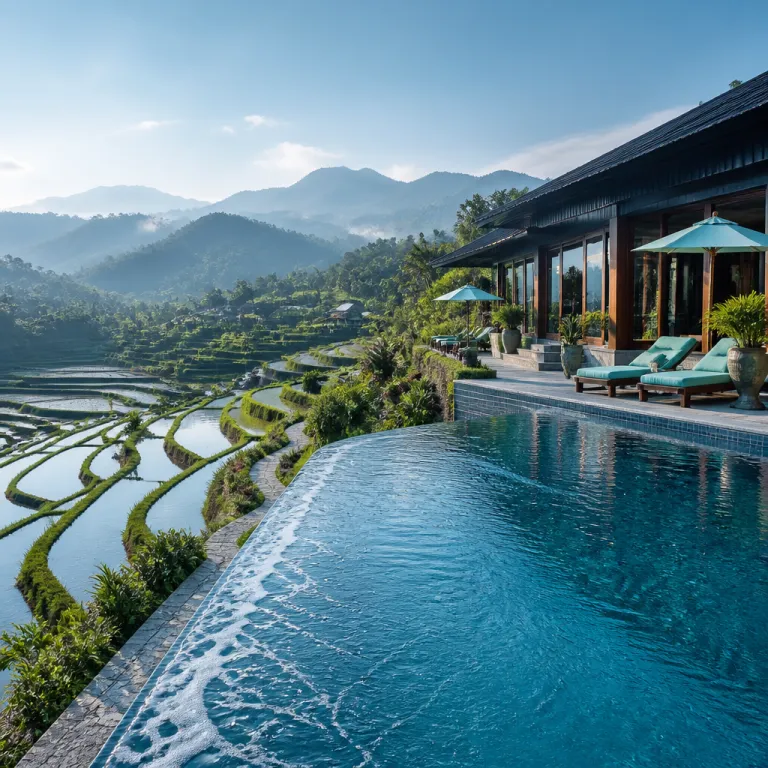
Terraced horizons and luxury stays in Vietnam’s highlands
Terraced rice paddies shape some of the most dramatic landscapes in Vietnam. These stepped rice terraces turn steep hills into sculpted fields where every flooded plot reflects the sky and the surrounding mountains. When you book a premium hotel near these terraced fields, you gain both refined comfort and a front row seat to living agricultural heritage.
Terraced rice paddies are tiered fields built on slopes for rice cultivation. They were developed to maximize arable land, prevent erosion, and manage water efficiently on steep terrain, so each rice terrace functions as both an engineering solution and a cultural symbol. In many mountainous regions of Asia such as the Philippines, China, and Japan, “What are terraced rice paddies?” and “Why were terraced rice paddies developed?” are questions answered not in books but in the daily rhythm of rice grown by farmers and local communities.
In Vietnam, terraced rice paddies stretch across provinces like Yên Bái, Hà Giang, and Lào Cai. Here, Vietnam rice production depends on rice cultivation that respects the contours of the mountains, creating terraced rice patterns that change color with each season. Luxury travelers choosing a hotel in these regions can watch paddy fields glow golden at harvest or shimmer with green water filled seedlings during planting, while still enjoying spa treatments, fine dining, and attentive concierge services.
Choosing a luxury base near Yên Bái’s sculpted rice landscapes
Yên Bái has become a reference point for travelers seeking terraced rice paddies combined with high end hospitality. Around Mù Cang Chải, the rice terraces form sweeping amphitheaters of terraced fields that photographers rank among the most striking rice fields in Asia. Selecting a premium hotel or resort here allows you to wake up above a rice field that shifts from lush green to amber as rice grown on each paddy field approaches harvest.
Many luxury properties in this region now design rooms and villas to frame the best possible view of the terraced rice. Floor to ceiling windows, private balconies, and infinity pools are oriented toward the rice paddies, so every rice terrace becomes part of your living space. For travelers arriving from Chiang Mai, Chiang Rai, or other rice terraces regions in Thailand, these Vietnam terraced panoramas feel both familiar and refreshingly different, especially when mist rises from the water filled paddies at dawn.
To reach Yên Bái in comfort, some guests pair their stay with Vietnam’s most elegant train journeys. Before heading north to the terraced fields, you can experience refined rail travel between coastal cities by booking a luxury train from Đà Nẵng to Quy Nhơn, then connecting by flight to Hà Nội and onward by road. From Hà Nội, private transfers to Mù Cang Chải typically take six to seven hours, according to local tour operators, and many upscale travelers choose properties such as Mu Cang Chai Ecolodge or Le Champ Tú Lệ Resort Hot Spring & Spa, where concierge teams can coordinate drivers, guides, and flexible check in times.
Mù Cang Chải and Cang Chải valleys: where every terrace is a viewpoint
Mù Cang Chải and the nearby Cang Chải valleys are among Vietnam’s most photographed terraced rice paddies. Here, each rice field curves around the hillsides, forming layered terraces that descend like giant staircases into the valleys. When you book a luxury lodge or premium ecolodge above these terraced fields, you gain uninterrupted views of rice paddies that glow at sunrise and soften into pastel tones at sunset.
High end properties in Mù Cang Chải now curate private excursions into the rice terraces with local farmers. Guests can walk along narrow paths between paddy fields, learn how rice cultivation relies on gravity fed water channels, and see how each paddy field is leveled by hand tools such as hoes and shovels. As one Hmong farmer explained to a recent visitor, “We shape every terrace with our hands, so when guests walk here, they are walking through our family history.” These guided walks often include photography stops at classic viewpoints where images capture the full sweep of terraced rice, from water filled seedlings to mature Vietnam rice ready for harvest.
For travelers who enjoy combining scenic drives with luxury stays, curated motorbike itineraries are increasingly popular. You can arrange premium guided rides through the highlands by using specialized Vietnam motorbike journeys for luxury travelers, which link upscale lodges overlooking rice terraces with spa resorts in nearby valleys. This style of trip lets you experience terraced fields from multiple angles, from panoramic passes to intimate rice paddies where rice grown by local communities sustains both families and regional rice production.
From Bali to Chiang Mai to Vietnam: comparing Asia’s iconic rice terraces
Many luxury travelers arrive in Vietnam with mental images of rice terraces from Bali or Chiang Mai. The famous paddy fields of Bali, especially around Tegallalang and Jatiluwih, showcase rice cultivation in a tropical setting where water flows through subak irrigation channels. In Chiang Mai and northern Thailand, rice fields often sit in broader valleys, with some terraced rice carved into hillsides but usually on a smaller scale than the vast Vietnam terraced landscapes.
By contrast, the terraced rice paddies of Yên Bái and Hà Giang rise higher and feel more dramatic. Here, terraced fields can climb hundreds of meters up a single slope, and each rice field is carefully supported by stone or earth retaining walls built by farmers and maintained by local communities. Travelers who have visited Bali Indonesia or Chiang Mai often remark that Vietnam rice terraces appear wilder and more expansive, especially when mist and low clouds drift through the valleys.
Some guests combine multiple destinations in one extended journey across Asia’s rice paddies. They might start among the paddy fields of Bali Indonesia, continue to the rice terraces near Chiang Mai in Thailand, then finish in northern Vietnam where rice grown on steep slopes demonstrates a different approach to rice production. This comparative perspective deepens appreciation for how water, climate, and culture shape each rice field, while luxury hotels in every region provide consistent comfort, attentive service, and curated excursions into the surrounding terraced fields.
How terraced rice paddies shape Vietnam’s luxury hotel development
The rise of luxury hotels near terraced rice paddies reflects broader shifts in Vietnam’s high end tourism. Investors and international brands now recognize that rice terraces and terraced fields are not only agricultural assets but also powerful scenic attractions. This has encouraged partnerships between global hotel groups and local developers in regions where rice fields dominate the landscape.
One notable example is the large scale agreement between a major international hotel group and a Vietnamese developer, which will reshape the country’s premium hospitality map. Details of this expansion, including thousands of new rooms across coastal and highland destinations, are outlined in an in depth analysis of Vietnam’s evolving luxury hotel network. According to that report, the Accor–Sun Group partnership will add more than 5,000 rooms across 20 properties, many in destinations where rice landscapes and mountain scenery are central to the guest experience.
Responsible development remains essential when hotels rise beside rice terraces and rice fields. High end properties increasingly work with farmers and local communities to protect water sources, maintain irrigation channels, and support sustainable rice cultivation that underpins long term Vietnam rice production. When you choose a hotel that invests in environmental management and community partnerships, your stay helps ensure that each rice field, paddy field, and terraced rice slope remains productive and visually stunning for future generations.
Planning your stay: timing, photography, and respectful visits
Timing your visit to terraced rice paddies in Vietnam can transform your experience. During planting season, rice terraces fill with water and reflect the sky, creating mirror like images that photographers love. Later, as rice grown in each paddy field matures, the terraced fields turn lush green before shifting to warm gold at harvest.
Many luxury hotels now offer photography focused packages for guests who want the best possible view of the rice terraces. These packages may include guided sunrise trips to high vantage points, private drivers who know when light hits specific rice fields, and on site editing workshops to refine your photos. Some properties even provide complimentary use of tripods or arrange for professional photographers to help guests capture both wide panoramas of terraced rice and intimate details such as water flowing between paddy fields.
Respectful behavior is crucial when you walk through rice paddies and terraced fields. Guests should stay on marked paths, avoid stepping into any rice field, and follow local guidance about when and where photography is appropriate, especially when farmers are working. Many hotels brief visitors on cultural etiquette, explaining how rice cultivation sustains local families and why Vietnam terraced landscapes must be treated as living workplaces rather than free theme parks, even when access to certain viewpoints feels open.
Understanding the people and practices behind the terraces
Behind every stretch of terraced rice paddies stand farmers who carve steps into hillsides and maintain intricate irrigation systems. These cultivators use hand tools such as hoes and shovels, along with natural materials, to build and repair the retaining walls that support each rice terrace. Local communities act as preservers of traditional rice cultivation methods, passing knowledge from one generation to the next so that rice grown on steep slopes continues to support regional rice production.
The context for these terraces is simple yet profound. Limited flat land in mountainous regions required innovative solutions, so people transformed slopes into terraced fields that increase food production, sustain local populations, and preserve cultural heritage. Eco tourism in terraced rice regions now supports a revival of traditional farming methods and encourages the integration of modern techniques with ancient practices, ensuring that water management, soil conservation, and Vietnam rice yields remain resilient.
Visitors who stay in luxury hotels near these rice paddies can engage with this heritage in meaningful ways. Many properties organize visits where guests can help plant seedlings in a paddy field, learn how water is shared fairly between rice fields, and understand why “Visit during planting or harvest seasons for vibrant views. Respect local customs and farming activities. Wear appropriate footwear for uneven terrain.” is practical advice rather than a simple slogan. These experiences deepen appreciation for the terraced rice landscapes and reinforce the value of choosing hotels that support both comfort and community well being.
Key figures about terraced rice paddies and Asian rice terraces
- The Ifugao Rice Terraces in the Philippines are estimated to be around 2,000 years old, according to the American Society of Civil Engineers, illustrating how long stepped rice fields have sustained mountain communities.
- The Shiroyone Senmaida terraces in Japan contain roughly 1,000 individual paddies, based on data from AroundUs and local tourism boards, showing how many small paddy fields can fit on a single coastal slope.
- In Vietnam, mountainous provinces such as Yên Bái and Lào Cai contribute significantly to national rice production by using terraced fields to expand arable land where flat plains are scarce, according to provincial agriculture departments.
- Across Asia, rice cultivation on terraced slopes helps reduce soil erosion compared with unstructured hillside farming, which supports long term agricultural productivity and protects downstream water quality.
- Eco tourism focused on rice terraces in countries such as Vietnam, China, and Thailand has grown steadily over the past decade, encouraging hotels to adopt more sustainable practices around water use and landscape preservation.
FAQ about terraced rice paddies and luxury stays in Vietnam
What are terraced rice paddies ?
Terraced rice paddies are stepped fields built on slopes for rice cultivation, where each level holds water and soil so rice can grow on otherwise unusable hillsides. These terraces rely on carefully constructed retaining walls and shared irrigation channels. In Vietnam, they are common in mountainous provinces and form some of the country’s most iconic landscapes.
Where are the most impressive terraced rice paddies in Vietnam ?
Some of the most impressive terraced rice paddies in Vietnam are found in Mù Cang Chải in Yên Bái province, Sa Pa and surrounding districts in Lào Cai, and Hoàng Su Phì in Hà Giang. These regions feature extensive terraced fields that climb high up the mountainsides. Many luxury and premium hotels have opened nearby, offering easy access to sunrise and sunset viewpoints over the rice terraces.
When is the best time to visit Vietnam’s terraced rice paddies ?
The best time to visit Vietnam’s terraced rice paddies is usually during planting season, when the terraces are filled with reflective water, and during the weeks just before harvest, when the rice fields turn golden. Exact timing varies by region and altitude, so travelers should confirm dates with local hotels or guides. Luxury properties often design seasonal packages around these peak visual periods.
How can I visit rice terraces respectfully while staying in a luxury hotel ?
To visit rice terraces respectfully, always stay on marked paths, avoid stepping into any rice field, and ask permission before photographing people at work. Many high end hotels provide briefings on local customs and can arrange guided walks with farmers who explain rice cultivation practices. Choosing properties that support community projects helps ensure your stay benefits both residents and the landscape.
Why were terraced rice paddies developed in mountainous regions ?
Terraced rice paddies were developed in mountainous regions to maximize arable land, prevent soil erosion, and manage water efficiently on steep slopes. By carving terraces into hillsides, farmers created flat surfaces where rice could be grown and water could be controlled. This system has supported food security and cultural continuity in many Asian countries for centuries.