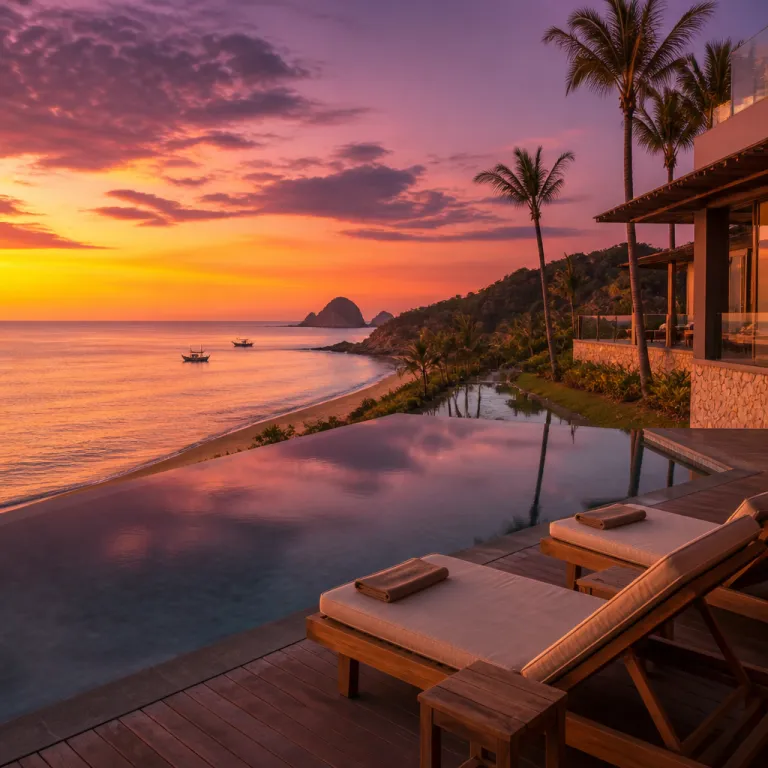
Why luxury hotels in Quy Nhon, Vietnam feel different from the big-name beach cities
Quy Nhon is the rare Vietnamese coastal city where luxury hotels still feel like a quiet secret. While Da Nang and Nha Trang chase volume, this stretch of central coast keeps its resorts low slung, its beaches uncrowded, and its pace unhurried. You come to this part of Quy Nhon, Vietnam for space, not spectacle.
Set between jungle clad hills and a long crescent beach, the city offers a softer kind of glamour. The best high-end stays here lean into the landscape with panoramic ocean views, generous terraces, and swimming pool decks that sit only a few metres from the sand. Even the largest properties keep their room options spread across villas and low rise blocks, so you rarely feel the crush you find in other Vietnam hotspots.
Search interest for upscale accommodation in Quy Nhon has surged as travellers tire of crowded strips further north. Yet visitor numbers still trail Da Nang, which usually means better availability, quieter pools, and more attentive service for you. For solo travellers used to the United States or European resort density, the empty early morning beach in Quy Nhon can feel almost surreal; one recent guest described a 6 a.m. walk as “twenty minutes without seeing another person, just fishing boats and the sound of waves.”
On the ground, the difference shows in how you move through the city and its sites. A ten minute ride from the centre takes you from a hotel lobby to local seafood shacks, Cham towers, and small cafés where staff still ask where you are from with genuine curiosity. The coastline stretches for miles, with long gaps between resorts, so even when hotels cluster around a cove, you still find private pockets of sand.
That balance between access and seclusion is what makes Quy Nhon’s better hotels such a strong choice for independent travellers. You can select a luxury resort with a serious spa, multiple pools, and spacious rooms, then step outside for alley level food and a motorbike ride that costs less than a poolside cocktail. It is Vietnam coastal living without the performance.
Mapping Quy Nhon’s coastline: where each luxury resort really fits
The luxury hotels Quy Nhon Vietnam offers spread along a broken coastline of coves, peninsulas, and fishing villages. Understanding this geography matters more here than in a compact city resort, because each bay delivers a different mood and level of isolation. Before you select a hotel, decide how close you want to be to the urban centre and how much you value total quiet over quick access.
Close to the city, Grand Hyams Hotel – Quy Nhon Beach anchors the main urban strip with a polished tower facing the ocean. This city hotel works for travellers who want to walk to cafés, local sites, and the lively evening promenade while still sleeping in modern rooms with wide views over the beach. You trade some privacy for energy, but you gain the ability to dip into real city life between spa sessions and laps in the swimming pool.
Head several miles south and the coastline breaks into smaller bays where resorts sit on more private beaches. Here you find a cluster of hotels and beach resorts that include Avani Quy Nhon Resort and Maia Resort Quy Nhon, both positioned away from the city noise but still within a short drive of the centre. These properties offer a middle ground, with ocean views, generous pools, and spa experiences that feel secluded yet not remote.
Further along the coast, FLC Luxury Resort and other large scale complexes occupy their own peninsulas, with golf courses, multiple pools, and long internal roads. These developments suit travellers who want everything on site, from varied room options to several restaurants and a full service spa. If you are used to integrated luxury hotels in Vietnam’s bigger cities, this model will feel familiar, though here the beaches are quieter and the ocean horizon less cluttered.
When you compare these stays, think in terms of how you like to move. If you want to walk out of your hotel and straight into local life, stay near the city beach and accept a busier shoreline. If you prefer to wake to only waves and birds, select a resort in one of the outlying bays and treat the city as a day trip rather than your daily backdrop.
For travellers benchmarking what a true five star stay should deliver, it is worth reading a broader perspective on what separates a genuine luxury hotel in Vietnam. Once you understand those standards, it becomes easier to see why certain Quy Nhon villas, resorts, and hotels stand out, and why others feel more like solid four star options dressed in five star language.
Anantara Quy Nhon Villas and the rise of villa style luxury
The property that has pushed luxury hotels Quy Nhon Vietnam into global conversations is Anantara Quy Nhon Villas. Set on a rocky cove south of the city, this resort is all about villas that step down the hillside towards the ocean, each with its own private pool and wide deck. The design is contemporary but warm, with natural stone, wood, and glass framing the sea rather than competing with it.
Anantara Quy Nhon Villas has been recognized on Travel + Leisure’s T+L 500 list, which matters because that index is built from reader feedback rather than marketing budgets. The resort’s villa hosts function as discreet concierges, arranging everything from in villa breakfasts to private boat trips along the coast and spa rituals timed to sunset. You feel looked after without being hovered over, a balance many luxury hotels struggle to achieve.
Inside, the spacious rooms blur into outdoor living areas, so you spend most of your time between the pool, the daybed, and the panoramic ocean views. Some villas sit almost at beach level, with direct access to the sand, while others perch higher with more dramatic ocean views and extra privacy. Either way, you are never far from the sound of waves, and you rarely see more than a handful of other guests at once.
The resort’s main swimming pool and restaurant sit above the cove, giving you a wide angle look at the Quy Nhon coastline. From here, you can see how few hotels and resorts actually line this stretch of shore, especially compared with the dense strips near Da Nang or the more developed bays further south. That scarcity is part of the appeal, and Anantara leans into it with low key programming rather than loud entertainment.
For travellers tracking Vietnam’s position on the global luxury map, Anantara Quy Nhon’s presence on the T+L 500 sits alongside other properties highlighted in round ups of Vietnam’s hotels on Travel + Leisure’s Global 500. The message is clear; this once quiet city is now firmly on the radar of serious luxury travellers, even if the streets still feel blissfully uncrowded. If you want the cachet of a globally recognized resort without the crowds that usually follow such lists, this is the moment to book.
Beyond Anantara, other villa style properties are emerging along the coast, often with fewer rooms and more emphasis on privacy. These stays tend to offer generous room options, from one bedroom villas for solo travellers to multi bedroom layouts for small groups, all with some form of private pool or plunge pool. As availability tightens at headline properties, these smaller resorts will become the insider choice for travellers who value space and quiet over brand recognition.
Avani, Maia and FLC: mid tier luxury that punches above its price
Not every traveller needs a villa host and a private infinity pool to feel well taken care of. For many, the sweet spot among luxury hotels Quy Nhon Vietnam lies in the mid tier resorts that deliver strong hardware, thoughtful service, and fair pricing. This is where Avani Quy Nhon Resort, Maia Resort Quy Nhon, and FLC Luxury Resort come into their own.
Avani Quy Nhon Resort sits on a sheltered bay south of the city, with all rooms facing the ocean and a compact layout that keeps everything within a short walk. The rooms are not the largest in local hotels, but they are cleverly designed, with balconies that frame the sea and enough space for solo travellers or couples to unpack properly. The main swimming pool sits just above the beach, so you can move between ocean and pool in a few steps.
Maia Resort Quy Nhon, near Trung Luong Beach, takes a more design forward approach, with villas and suites arranged around landscaped gardens and several pools. Many room options here include private plunge pools, giving you a taste of villa living without Anantara level pricing. The resort’s focus on food and spa experiences makes it a strong choice for travellers who care as much about wellness and dining as they do about ocean views.
FLC Luxury Resort, by contrast, is a large scale complex with golf, multiple pools, and a wide range of rooms and villas. This resort suits travellers who like having everything on site, from kids’ facilities to several restaurants and a full service spa. If you are travelling with friends or family, the spacious rooms and multi bedroom villas can make this one of the most practical beach resorts in the area.
Across these properties, you will notice that pricing often undercuts comparable stays in more famous Vietnam beach cities. Typical nightly rates for a quality luxury hotel in Quy Nhon often hover around 200 USD, based on publicly listed prices on major booking platforms at the time of writing; in peak holiday periods, some oceanfront suites and villas can climb higher, while shoulder season promotions may dip below that figure.
As you compare these hotel options, pay attention to how each property balances privacy, proximity to the city, and on site facilities. If you want quick access to local sites and street food, choose a resort closer to the centre and accept a livelier beach. If your priority is quiet mornings, long walks along nearly empty sand, and uninterrupted ocean views, lean towards the more secluded bays even if it means a longer ride into town.
The Vietage train, flights and the reality of getting to Quy Nhon
Reaching luxury hotels Quy Nhon Vietnam still requires a bit more planning than flying into Da Nang or Nha Trang. That extra step is part of why the city remains less crowded, but it also means you should think carefully about your route. The main gateway is Phu Cat Airport, about 30 kilometres from the city centre, with regular flights from major Vietnamese cities.
There are no direct international flights from the United States or Europe into Quy Nhon yet, so most travellers connect through Hanoi, Ho Chi Minh City, or Da Nang. From those hubs, short domestic flights bring you into Phu Cat, where resort cars and taxis wait to shuttle guests to their hotels and resorts. Travel time from the airport to a hotel on the main city beach is usually under an hour, while more remote resorts can take slightly longer depending on traffic and exact location.
For travellers who enjoy the journey as much as the destination, The Vietage by Anantara has changed how people approach the central coast. This luxury rail experience runs between Da Nang and Quy Nhon, turning what used to be a functional transfer into a slow travel highlight with dining, drinks, and wide windows on the ocean. Many guests now combine a few nights in Da Nang’s urban resorts with a rail journey south, then settle into a quieter Quy Nhon stay.
Once you arrive, moving between the city, beaches, and resorts is straightforward, though not always polished. Taxis and ride hailing apps cover most routes, from the centre to outlying sites like Cham towers or fishing villages. For shorter hops between your hotel, nearby restaurants, and the beach, walking is pleasant in the cooler hours, while motorbike taxis offer a fast, very local way to cover a few miles.
The practical gaps show up when you look for variety beyond your resort. Outside the main city strip, dining options thin out quickly, so guests at more remote hotels often eat most meals on site. If you value independent exploring, consider staying closer to the city beach or planning specific evenings in town, then returning to your more private resort afterwards.
For travellers weighing whether to base themselves in Da Nang or Quy Nhon, it can help to read a guide to elegant ways to enjoy Da Nang as a refined coastal escape. Many end up splitting time between the two cities; Da Nang for its dining and nightlife, Quy Nhon for its quieter beaches, more spacious rooms, and slower rhythm. The Vietage makes that combination feel less like a compromise and more like a curated itinerary.
Beaches, pools and room types: how to choose the right stay for you
When you look at luxury hotels Quy Nhon Vietnam on a booking site, the photos can blur into one long stretch of sand and infinity pools. On the ground, though, each beach, pool layout, and room configuration shapes a very different stay. The key is to match your preferences to the right combination of beach access, pools, and room options.
The main city beach offers a long, walkable curve of sand with a lively promenade, local cafés, and easy access to the centre. Hotels and resorts here tend to be vertical rather than sprawling, with higher floors delivering the best ocean views and lower floors offering quicker access to the street. If you like to step out of your hotel and immediately feel the pulse of the city, this is your zone.
South of the city, smaller coves and bays host resorts with more private beaches and fewer outside visitors. At places like Anantara Quy Nhon Villas, Avani, and Maia, the swimming pool often sits just above the sand, so you can alternate between ocean and pool without crossing public areas. These properties usually feature spacious rooms or villas, many with private pools or outdoor baths that make staying in as appealing as going out.
Room categories deserve close attention, especially if you are a solo traveller who values space but not excess. Some villas and suites are designed for families, with multiple bedrooms and large living areas that may feel oversized if you travel alone. In those cases, a high floor room with panoramic ocean views in a city hotel, or a smaller villa with a plunge pool in a resort, can offer better value and a more balanced use of space.
Pet friendly options are still limited among luxury hotels in this part of Vietnam, so if you plan to travel with an animal, check policies carefully before you book. A few city properties, such as selected room categories at FLC City Hotel Beach Quy Nhon or some boutique hotels near the centre, have begun trialling pet stays with advance registration and cleaning fees. Many high end resorts still restrict animals to protect landscaping and shared pools, so if pet friendly travel is non negotiable, you may need to prioritize flexible city hotels over the most secluded bays.
Finally, think about how you actually use water spaces. If you swim laps, look for a long, rectangular swimming pool rather than a sculpted lagoon pool that is better for lounging than exercise. If you care more about the feel of the ocean, choose a resort with gentle waves and easy entry, rather than a dramatic rocky coastline where the views are spectacular but swimming is more limited.
When to go, what to do and how to keep it low key
Timing your stay at luxury hotels Quy Nhon Vietnam can make the difference between a good trip and a great one. The central coast has a different rhythm from the south, with a dry season that typically runs from around March to September and a wetter, windier period later in the year. During the dry months, the ocean is calmer, the skies clearer, and the beaches more inviting for long walks and early morning swims.
Official tourism guidance often answers the question “What is the best time to visit Quy Nhon?” with a simple line; “March to September offers the best weather.” That is accurate, but it does not mean you should avoid the rest of the year entirely, especially if you value quiet over perfect sunshine. In the shoulder months, you may encounter more dramatic skies and occasional showers, but you also find lower occupancy, better availability, and more attentive service at many hotels and resorts.
Once you are here, the main draw remains the coastline itself. Long walks along the city beach at sunrise, quiet afternoons on more private stretches near resorts, and short trips to coves like Bai Xep give you a sense of how varied this shore can be. Bai Xep in particular has become a favourite day trip, with its small fishing village, simple cafés, and a beach that feels far removed from the city despite being only a short ride away.
Beyond the sand, Quy Nhon’s sites include Cham towers on nearby hills, local markets, and small temples scattered through the city. These are not blockbuster attractions, but they add texture to days built around pools, spa sessions, and long lunches. For many travellers, the real highlight is the everyday life you see from a motorbike taxi or a café stool, rather than any single monument.
Wellness has also become a quiet strength of the city’s luxury hotel scene. Many hotels now feature serious spas, with Vietnamese and regional treatments, hydrotherapy pools, and wellness programs that run over several days. For travellers who have followed the rise of wellness tourism across Vietnam, Quy Nhon offers a less commercial, more grounded version of that trend.
If you plan carefully, you can use Quy Nhon as a base for a wider central coast itinerary, linking it with Da Nang, Hoi An, or even inland highland towns. The key is to keep your schedule light, leaving space for unplanned afternoons by the pool, slow walks along the beach, and the kind of small encounters that make this city feel like Vietnam before the crowds. That is the real luxury here; time, space, and the sense that the coast still belongs more to locals than to hotels.
Key figures on Quy Nhon’s luxury hotel scene
- Quy Nhon currently hosts a small but growing cluster of notable luxury resorts along its coastline, a relatively modest number compared with Da Nang or Nha Trang, which helps keep beaches and pools less crowded.
- Industry reports and provincial tourism data suggest that occupancy at higher end hotels and resorts in Quy Nhon generally remains below the most saturated Vietnamese beach cities during peak periods, often leaving more flexibility for last minute bookings than in Da Nang or Nha Trang.
- Typical nightly rates for a quality luxury hotel in Quy Nhon hover around 200 USD, based on major booking platforms’ published prices, which is often lower than comparable oceanfront properties in more famous regional destinations.
- The city’s coastline stretches for many kilometres, with long gaps between major resorts, so even at higher occupancy levels, guests still enjoy generous personal space on the beach.
- Domestic flights connect Quy Nhon with major Vietnamese cities year round via Phu Cat Airport, giving travellers multiple daily options to reach the coast even though direct long haul flights have not yet arrived.
Frequently asked questions about luxury hotels in Quy Nhon
What is the best time to visit Quy Nhon for a luxury beach stay ?
The most reliable weather for enjoying beaches, pools, and ocean views in Quy Nhon runs from roughly March to September. During these months, the sea is calmer, rain is less frequent, and visibility is better for coastal walks and boat trips. Outside this window, you can still stay comfortably in luxury hotels, but you should expect more wind, occasional heavy showers, and rougher seas.
Are there direct flights to Quy Nhon from abroad ?
There are currently no direct international flights from the United States or Europe into Quy Nhon. Most travellers connect through major Vietnamese hubs such as Hanoi, Ho Chi Minh City, or Da Nang, then take a short domestic flight to Phu Cat Airport. From there, resort transfers or taxis cover the final 30 kilometres to the city and its coastal hotels and resorts.
Is Quy Nhon suitable for families as well as solo travellers ?
Quy Nhon works well for families, thanks to spacious rooms, villas with private pools, and long, gently sloping beaches. Larger resorts like FLC Luxury Resort and some villa complexes offer kids’ facilities, multiple pools, and varied dining, while smaller properties focus more on quiet and privacy. Solo travellers tend to prefer mid sized resorts or city hotels where it is easier to walk to cafés, markets, and local sites.
How far are the main resorts from Quy Nhon city center ?
City beach hotels sit within a few minutes’ walk or a short taxi ride of the centre, making it easy to combine urban exploring with ocean time. Resorts on nearby bays, such as Avani or Maia, are usually 20 to 30 minutes by car from the main streets, while more remote complexes like some villa clusters or FLC properties can be slightly farther. In all cases, travel times are manageable, but you should factor them in if you plan frequent trips into town.
Do luxury hotels in Quy Nhon offer pet friendly options ?
Pet friendly policies remain limited among high end hotels and resorts in Quy Nhon, especially at properties with extensive landscaping and shared pools. A few city hotels are beginning to allow small pets in specific room categories, often with advance notice and extra cleaning fees. If travelling with an animal is essential, confirm pet policies directly with your chosen hotel before booking, and be prepared to prioritize flexible city stays over the most secluded resorts.
References : Vietnam National Administration of Tourism ; Bình Định provincial tourism statistics ; major booking platforms’ published rate and occupancy data.